10 days left in the motherland.
Yesterday I arrived back in Stellenbosch, tomorrow we embark on a little road trip past Gansbaai to Cape Agulhas and then on to Waenhuiskrans. The names of places ring bells for being where one goes to shark cage dive, the southernmost tip of Africa, and the town where Madel Terreblanche in the soap 7de Laan had a beach house. More than that I do not know.
Europeans have often asked me how many African countries I have visited, probably presuming that going from Kenia to Ghana to Swaziland is equal in distance and ease to travelling across their own continent. But Africa is an enormous continent with unequalled diversity and cultural differences, and travelling here means accepting hours (if not days) in the car or bus just to get from one side of the country to the other. When we were little my mom would drive the 12+ hours from Pretoria to Jeffrey's Bay all by herself while we would count different coloured cars, play I-spy-with-my-little-eye, suck on Dirkie condensed milk tubes and wait to see who could spot the ocean first.
Much of long distance driving to me still holds the fascination of looking out of the window and seeing another world go by. I know the golden afternoon sunlight in the Free State, the sudden spot of green as one approaches the Orange river, the soccer statue on the back roads in the small town of Richmond, or where the speed cameras between George and Wilderness are. My mother has taken us on a road trip to Swaziland, Lesotho and Kwa-Zulu Natal, where we stayed over in a monastery, ate cup a soup and drank wine after having gone up on Durban's Moses Mabidha stadium. In Swaziland we walked through the woods or saw hundreds of schoolchildren walking along the roads. To get up into the mountains of Lesotho we clambered into a Land Rover and held onto our seats whilst driving up the Sani Pass.
Other trips have included detours to the Owl House in Nieu Bethesda or visiting Sutherland's Southern African Large Telescope (SALT) to see the stars of the African sky (but then having the visit cancelled due to a magnificent display of clouds at sunset that sadly prevented any real star gazing). We've gone up Table Mountain, we've traced the history of our family at Franschhoek's Huguenot Memorial Museum or surveyed the land in the Valley of Desolation.
Once, my mother and I took the train from Johannesburg to Port Elizabeth and got stuck somewhere in the middle of the Free State, which turned a 20-hour trip into a 36-hour adventure. After a midnight arrival in P.E. we stayed over in a hotel before heading off to the Addo Elephant National Park and then visiting my grandmother in Jeffrey's Bay.
Tomorrow we embark again, to see the world in one country.

Monday, 29 February 2016
Sunday, 10 January 2016
Petrichor
I've been home for a month now, and that is what this place is: home. Driving into Pretoria after a two-day trek up from the Cape, I knew coming over the hill by the Delmas offramp that we were in my hometown, that the house was not far away now. I knew the shortcuts, the menu at Kung-Fu Kitchen, the dry smell of the highveld air on hot summer's day. Everything here is easy in its familiarity.
For a week I have been stuck at my sister's place owing to the fact that I don't have a car and thus couldn't really go anywhere. Therefore, we decided to organise a braai on Saturday and invite a couple of friends over to hang out. One half were childhood friends, people who knew where everything was in the kitchen at the old house, who knew our dogs, who know all the intricacies of lives lived as webs spun in entanglements. A university friend came with her husband, my cousin showed up, boyfriends were brought along to this comfortable congregation.
The salads and snacks, pre-prepared, were waiting in the refrigerator (the one imposing the pungent smell of garlic on the entire kitchen), the plates and cutlery had been laid out and everything was ready. The clouds had gathered across the sky, but we expected it to pour down for 15 minutes in a typical highveld storm and then resume our barbecuing. We even performed a rain dance with a rain stick that my mother had bought more than a decade ago in Mexico. But the dance proved too effective and the rain never seized. We gathered inside, waiting it out, realising at some point that this braai would have to move partially to the kitchen. The boerewors was thrown in a pan, the chicken grilled in the oven whilst two guests braved the rain and barbecued the rest whilst huddled under an umbrella.
The meal was consumed and conversation flowed as everyone had tales to tell of small banalities and big events. By 10 PM the rain finally stopped and most went home, with only four of us enjoying the last bottles of red wine whilst sitting outside and smelling the crisp nighttime air. More than the city this was what I had missed: a contentment found in the congeniality of old friends, of people you needn't ever explain your life to because they had been there for so much of it already.

For a week I have been stuck at my sister's place owing to the fact that I don't have a car and thus couldn't really go anywhere. Therefore, we decided to organise a braai on Saturday and invite a couple of friends over to hang out. One half were childhood friends, people who knew where everything was in the kitchen at the old house, who knew our dogs, who know all the intricacies of lives lived as webs spun in entanglements. A university friend came with her husband, my cousin showed up, boyfriends were brought along to this comfortable congregation.
The salads and snacks, pre-prepared, were waiting in the refrigerator (the one imposing the pungent smell of garlic on the entire kitchen), the plates and cutlery had been laid out and everything was ready. The clouds had gathered across the sky, but we expected it to pour down for 15 minutes in a typical highveld storm and then resume our barbecuing. We even performed a rain dance with a rain stick that my mother had bought more than a decade ago in Mexico. But the dance proved too effective and the rain never seized. We gathered inside, waiting it out, realising at some point that this braai would have to move partially to the kitchen. The boerewors was thrown in a pan, the chicken grilled in the oven whilst two guests braved the rain and barbecued the rest whilst huddled under an umbrella.
The meal was consumed and conversation flowed as everyone had tales to tell of small banalities and big events. By 10 PM the rain finally stopped and most went home, with only four of us enjoying the last bottles of red wine whilst sitting outside and smelling the crisp nighttime air. More than the city this was what I had missed: a contentment found in the congeniality of old friends, of people you needn't ever explain your life to because they had been there for so much of it already.

Thursday, 19 November 2015
Terrible Love
 |
| They wanted to separate us. They have brought us together. |
Friday night I had met some friends near the Centre Pompidou for drinks and dinner, and just as we were deciding on pizza or thai food a message came through about there having been attacks at the Stade de France. I didn't even know really that a football game was happening, so I thought it might just be soccer violence. The others whipped out their phones as well and as the news began getting progressively worse and the sirens of police vans increased we all decided to head home. Once there, I spent the rest of the evening with the couple I am staying at, all glued to the TV and watching as the death toll went steadily up. Friends kept messaging if everything was ok, that they'd just heard the news. When the death toll reached 80 people and the siege in the Bataclan was still ongoing, I decided to go to bed, that this could only get worse.
 |
| Change. Love. |
I packed my bag and walked to work, thinking that the thesis waits for no terrorists. The Marais, usually brimming on the weekends, was empty, the city deserted. Somehow, after unusually sunny November weeks winter had come in this night of terror. At a pedestrian crossing a siren could be heard approaching and for a split-second the man next to me and I looked at one another, a moment of dread in thinking "what has happened now?".
 |
| Fight hatred with this thing we call love. |
Saturday we were supposed to go to a concert, now cancelled, so we gathered at a friend's place, ate together and drank wine while discussing the events. Somehow after tragedy strikes one needs others to make sense of how this could happen, after 9/11, after Charlie Hebdo, after increases in security. Who was behind all of it? And what was the aim?
 |
| The Other is your friend. |
On Monday, the office had a general meeting to discuss the weekend's events and ask if anyone wanted to say anything. It was odd and awkward, thinking that anyone would want to talk about their feelings in front of 30 colleagues. Instead, people stood in office doors and huddled over lunch, explaining where they were on Friday and whether they knew of anyone who had gotten hurt. Some were saying that the Charlie Hebdo attacks earlier this year felt markedly different, because one could easily say "That has nothing to do with us, that is not our fight". But now, it was an attack on society itself and the values it guards most closely. It was an attack on the freedom to go have a beer after work on Friday or see the prostitution exhibit at the Musée d'Orsay or enjoying a night of head-banging with your friends. This time everyone was affected because it was a terror that goes against our very way of life.
Perhaps because of this life goes on. People are opposing statements against this being "the fault of the refugees" or "the muslims" or other hateful thoughts that creep in and make you not see the other as human and equal and as having the same rights as you. People seem to be wanting to be kind, because despite the governments bombing ISIS and the media whipping itself into a frenzy, there is no way other than trying, at the very least, to be kind.
 |
| The silence of pain is at times stronger than the cry of hatred. |
Thursday, 12 November 2015
Built to roam
There was a birthday party at a beach with me not very keen on being there, me very keen on just saying a quick hello and then cycling home to a night spent in front of the TV. But somehow intentions changed and four of us ended up going out and dancing until the sun came up again. Hungover and tired I saw your FB message, and from there on for nearly half a year I was in the throes of a different kind of catfishing.
Catfishing normally implies meeting someone online and then forming an intense, co-dependent relationship with them. When the one then tries to see or speak to the other IRL, their illusion starts showing its first cracks as the other will always find some excuse for not being available. The body and its speaker don't manage to be in the same place at the same time, thus making it hard for the catfishee to continue the relationship. In most cases, the catfishee then finds out that the catfish is not who they said they were, and that they faked their profile for some reason, but that in essence it is the same person, just not. Then the catfishee is very disappointed and the relationship does not continue.
In an article for the New Yorker, Amanda Ann Klein considers the catfish by looking at how ambient intimacy fools someone into believing that this online-thing is a real thing. That words on screens are just conversations done differently, that someday a meeting will occur, something will develop beyond its digital origins into reality, and somehow the fairy tale will be complete.
But just as I naively clung to the idea of this real-not-real person, everywhere around me there were people doing the same thing. A friend was involved with someone with whom it was a constant back-and-forth of currents of communication being interrupted by long stretches of absence. Another uses one of the apps to entertain herself, admitting that none of the people she chats to are serious interests and yet becoming annoyed when no messages light up her inbox. We are all idiots not for love but for attention, lulling ourselves with pointless questions about the other's life into a belief that this matters.
Klein's article is more optimistic than my thoughts, stating that in the age of social media we have become used to a different kind of intimacy where we do not see distance as an obstacle, but instead accept "an ever-growing modern form of intimacy: the bodiless, online romance". The world has evolved so much to no longer question a mind-body-screen split, instead accepting the internet as merely another extension of our reality. It is an unusual thing, wanting to trust that what is presented to you on your smartphone is a flesh-and-blood person with valid experiences that you want to hear about. The most resonant part of the article is its last phrase: this shift to finding someone online is simply the continuance of what humans have always looked for - "the attempt and the failure to truly know another person".
Whereas catfishing still implies a relationship of some longevity, Nancy Jo Sales looks at the influence of dating apps and the possible "dating apocalypse" in an article for Vanity Fair , as most millennials use a combination of apps to chat with lists of people where the ultimate aim is to get someone in bed and not to actually get to know them. The apps all run similar algorithms where people can match up with one another by approvingly swiping right, with most men apparently using a combination of apps to find as many women to sleep with as possible. The article argues that the applications creating the illusion of there being an abundance of possible partners available, resulting in users thinking that someone better might always be just a swipe away. Basically people swipe right, meet up, hook up and then forget they ever exchanged bodily fluids.
One man in the article is quoted as considering whether his insatiable habit of sleeping with an ever increasing amount of women is misogynistic, whilst a group of sorority girls discusses how the sex they are having is mostly short, unpleasant and at times even painful. My question then is: if you're not enjoying the experience, why continue? Just as I wouldn't continue to buy chocolate with orange peel in it as I don't like the taste I won't go continuously having bad sex with men who won't remember my name because neither situations would make me feel particularly good. And with there being so many situations beyond my control that could already make a day seem quite shitty, I think being able to control who you sleep with and why should not be something you simply do because everyone is doing it.
Now, more than a year after being reverse-catfished, I found myself again in a digital weird-ship. An interest in the life of an other with an interest in mine, or so I thought. But after a while mysteries that reveal no new ways of solving them become tedious; you realise that despite a child-like trust there is no way of trusting a screen; ultimately, none of this matters because the thing about digital friends is that you can be rid of them simply by turning off your phone.
Catfishing normally implies meeting someone online and then forming an intense, co-dependent relationship with them. When the one then tries to see or speak to the other IRL, their illusion starts showing its first cracks as the other will always find some excuse for not being available. The body and its speaker don't manage to be in the same place at the same time, thus making it hard for the catfishee to continue the relationship. In most cases, the catfishee then finds out that the catfish is not who they said they were, and that they faked their profile for some reason, but that in essence it is the same person, just not. Then the catfishee is very disappointed and the relationship does not continue.
In an article for the New Yorker, Amanda Ann Klein considers the catfish by looking at how ambient intimacy fools someone into believing that this online-thing is a real thing. That words on screens are just conversations done differently, that someday a meeting will occur, something will develop beyond its digital origins into reality, and somehow the fairy tale will be complete.
But just as I naively clung to the idea of this real-not-real person, everywhere around me there were people doing the same thing. A friend was involved with someone with whom it was a constant back-and-forth of currents of communication being interrupted by long stretches of absence. Another uses one of the apps to entertain herself, admitting that none of the people she chats to are serious interests and yet becoming annoyed when no messages light up her inbox. We are all idiots not for love but for attention, lulling ourselves with pointless questions about the other's life into a belief that this matters.
Klein's article is more optimistic than my thoughts, stating that in the age of social media we have become used to a different kind of intimacy where we do not see distance as an obstacle, but instead accept "an ever-growing modern form of intimacy: the bodiless, online romance". The world has evolved so much to no longer question a mind-body-screen split, instead accepting the internet as merely another extension of our reality. It is an unusual thing, wanting to trust that what is presented to you on your smartphone is a flesh-and-blood person with valid experiences that you want to hear about. The most resonant part of the article is its last phrase: this shift to finding someone online is simply the continuance of what humans have always looked for - "the attempt and the failure to truly know another person".
Whereas catfishing still implies a relationship of some longevity, Nancy Jo Sales looks at the influence of dating apps and the possible "dating apocalypse" in an article for Vanity Fair , as most millennials use a combination of apps to chat with lists of people where the ultimate aim is to get someone in bed and not to actually get to know them. The apps all run similar algorithms where people can match up with one another by approvingly swiping right, with most men apparently using a combination of apps to find as many women to sleep with as possible. The article argues that the applications creating the illusion of there being an abundance of possible partners available, resulting in users thinking that someone better might always be just a swipe away. Basically people swipe right, meet up, hook up and then forget they ever exchanged bodily fluids.
One man in the article is quoted as considering whether his insatiable habit of sleeping with an ever increasing amount of women is misogynistic, whilst a group of sorority girls discusses how the sex they are having is mostly short, unpleasant and at times even painful. My question then is: if you're not enjoying the experience, why continue? Just as I wouldn't continue to buy chocolate with orange peel in it as I don't like the taste I won't go continuously having bad sex with men who won't remember my name because neither situations would make me feel particularly good. And with there being so many situations beyond my control that could already make a day seem quite shitty, I think being able to control who you sleep with and why should not be something you simply do because everyone is doing it.
Now, more than a year after being reverse-catfished, I found myself again in a digital weird-ship. An interest in the life of an other with an interest in mine, or so I thought. But after a while mysteries that reveal no new ways of solving them become tedious; you realise that despite a child-like trust there is no way of trusting a screen; ultimately, none of this matters because the thing about digital friends is that you can be rid of them simply by turning off your phone.
Friday, 6 November 2015
Lively up yourself
Long, dark days, that is what I know November will be. The sun will not set later than 17.00 again until January. I wake in darkness, I go home from work in darkness, and with three weeks left to complete this thesis and wholly embracing what the Fates are spinning, I am feeling a bit overwhelmed.
Last week I walked home at 21.00 and just managed to get some cheese and pesto for a late dinner. Upon rummaging in my bag in front of my building in search of the keys, an older man came shuffling by, and stopped to inform me that I should be smiling because I am pretty and would surely be married soon.
This, after reading and writing about patriarchy and sexism and racism all day every day for the past weeks. This, late in the night when I am exhausted. This, where I never asked the old man to give his opinion on my appearance. This, because 'resting bitch face' is not a real thing. This, because if I believed in a God I would ask her to smite the bastard down.
So fuck your patriarchy. Fuck coming up to me drunkenly at a party willst slurring the words "hey you're pretty want a Parisian lover". Fuck women online receiving rape threats for having an opinion. Fuck thinking that this makes me an angry feminist bitch.
What I find endlessly frustrating is how people believe in the dichotomies. They believe in that biological differences are why we should be treated unequally. They believe in women taking care of the household and the children while men complete DIY projects and take out the trash and maybe fire up the barbecue. They believe in certain rites and rituals being associated with one gender or the other, but are unwilling to see that gender itself is just a construct that they are maintaining through the ritualisation of everyday gender performances.
I believe in choice. I believe in earning the same amount of money for doing the same job. I believe in not being judged on the basis of having a penis or a vagina. I believe in my ability to also complete the DIY projects and barbecuing and checking my car's tyre pressure if I wanted to. And I believe in the right of men to prefer cooking and cleaning to fixing cars or drinking beers with male friends whilst complaining that Playboy will no longer feature fully nude women. I believe in no one being bullied online for saying they don't want to be told when to smile. I believe in feminist not equalling misandrist. I believe in equality, and for the life of me cannot understand those that don't.
Friday, 23 October 2015
Free & Untorn
In 2011, my tuition was R 35,020 for one year including a registration fee of R 3200 but not any of the books, stationary or living costs. Ok, I lived at home, but then again my sister was completing her Masters at the same time as I was finishing the BA, so for 2011 my mother probably had to pay around R70000 to the university. Without achievement bursaries and family waivers and my mother's hard work as a tour guide we probably would not have had the privilege of higher education.
For about a week now my FB feed has been flooded with student protest from all around the country. Friends at different universities repost and provide commentary of what is going on, giving a broader overview than the media has been able to. Yesterday I had a long Skype session with a friend about why the protests are happening now, what the problems at the heart of them were, what this means going forward. Six students in Cape Town have been arrested and accused of high treason as thousands of others today march on the Union Buildings in Pretoria to call for a meeting with President Zuma on the shocking price increases of tertiary education.
I am too far away and have been unaffected by any of this as for the past two years I have payed €500 in total as Germany doesn't have tuition fees, just a student contribution. I have profited from a system that highlights education and even provides financial aid through BAföG (a law that allows for a monthly stipend of up to €650 where half is an interest-free loan that has to be repaid 5 years after completing the degree) to those whose parents do not have the financial means to support them. Naturally, the two countries are vastly different and Germany has one of the strongest economies, thus having the funds to support tuition-free learning. For many of the students currently protesting, they might be the first in their family to even get to university, the first to have a chance at something better. And is this not what everyone wants: for those who come after us to do better and to have it better? Instead there is global warming and ISIS and corruption and #BlackLivesMatter and Alaskan oil fields and billions in mismanaged funds and and and.
But this protest back home, man, it stirs something inside of me, somehow the hope that change for the better may come from this, that somehow there has been a small shift in people's attitudes that simply said: no more. We have ignored this up to now, we have laughed about a president that cannot even read his party's membership numbers, we have accepted the crime rate, we have accepted Nkandla, we have accepted the xenophobia, we have accepted the fear of one another, we have all said that something must change but what and how and then gone back to our braai and watching the rugby/cricket/Isidingo/7de Laan.
So perhaps this, this could be it. This, more than petty politics between the ANC and the DA. This, more than bridges collapsing on the M1 or grandmothers still using the 'K' word or Marikana. This, because the born frees have had enough. This could be our June 16, 1976.
For about a week now my FB feed has been flooded with student protest from all around the country. Friends at different universities repost and provide commentary of what is going on, giving a broader overview than the media has been able to. Yesterday I had a long Skype session with a friend about why the protests are happening now, what the problems at the heart of them were, what this means going forward. Six students in Cape Town have been arrested and accused of high treason as thousands of others today march on the Union Buildings in Pretoria to call for a meeting with President Zuma on the shocking price increases of tertiary education.
I am too far away and have been unaffected by any of this as for the past two years I have payed €500 in total as Germany doesn't have tuition fees, just a student contribution. I have profited from a system that highlights education and even provides financial aid through BAföG (a law that allows for a monthly stipend of up to €650 where half is an interest-free loan that has to be repaid 5 years after completing the degree) to those whose parents do not have the financial means to support them. Naturally, the two countries are vastly different and Germany has one of the strongest economies, thus having the funds to support tuition-free learning. For many of the students currently protesting, they might be the first in their family to even get to university, the first to have a chance at something better. And is this not what everyone wants: for those who come after us to do better and to have it better? Instead there is global warming and ISIS and corruption and #BlackLivesMatter and Alaskan oil fields and billions in mismanaged funds and and and.
But this protest back home, man, it stirs something inside of me, somehow the hope that change for the better may come from this, that somehow there has been a small shift in people's attitudes that simply said: no more. We have ignored this up to now, we have laughed about a president that cannot even read his party's membership numbers, we have accepted the crime rate, we have accepted Nkandla, we have accepted the xenophobia, we have accepted the fear of one another, we have all said that something must change but what and how and then gone back to our braai and watching the rugby/cricket/Isidingo/7de Laan.
So perhaps this, this could be it. This, more than petty politics between the ANC and the DA. This, more than bridges collapsing on the M1 or grandmothers still using the 'K' word or Marikana. This, because the born frees have had enough. This could be our June 16, 1976.
Wednesday, 21 October 2015
Ich will keine Schokolade

There are essential choices to be made in life.
Cats or dogs.
Pants or skirts.
Blond, brunette, red or black (or any other colour, really).
Vanilla or chocolate.
Today, we chose chocolate, all the way.
The day started out with a marvelous sunset above the city roofs before heading into the Musée d'Orsay an hour before opening to see the Misère et Splendeurs exhibition again, this time without the masses and the space to notice the details or contemplate with the other interns the practicality and positioning of a special intercourse chair made for a corpulent king whose name I can't recall but who was a frequent visitor to the higher-end Parisian brothels before being crowned. In glass counters we discovered century-old condoms, business cards for the ladies of the night touting Swedish massages and multilingual abilities as well as small pamphlets for brothels that look identical to the ones handed out now also in the North of the city for marabouts that can cure any ailment.
 |
| A rare sight: the Musée d'Orsay, empty. |
 |
| Manet's Olympia, where no photograph could do its beauty justice. |
 |
| Sweetness! |
 |
| Hot chocolate and Negresco. |
 |
| Their signature patisserie, the Mont Blanc. |
From there we trotted back reluctantly to sit at our computers and do menial work of unimportance.
What a day.
Saturday, 17 October 2015
No More Losing The War
Things packed,
Bag slung over the shoulder,
coat on, I intended to say: "Have a nice evening."
But she interrupted
asking whether I was ok, that I hadn't looked it these past days, if everything was alright?
For two seconds
my brain ran the gamut of answers
all starting with no.
No, because I fear I won't make this deadline,
mostly because of my own self-sabotage
and laziness.
No, because the man in front of me is tip-toeing through his day
and I want to shout at him to use his ENTIRE FUCKING FOOT
as I, elephantine, stampede through the concrete jungle
embarrassed by this bad analogy.
No, because the darkness I see when I go to sleep is all
sharp edges and steely blue-black shards,
not the comforting velvet fur of a black cat disappearing into night.
No, because He interfered with my plans
and I hate having to bow, to bend,
to compromise when it is none.
No, because I feel fat and
there aren't any good mangoes to be had
and all my clothes are shades of black and blue,
so I wear my nightmares to work.
No, because I am paralysed by a fear of
yet unmade decisions
so I make none.
No, because my new shoes hurt so much that
yesterday I was shuffling home,
outpaced by a woman in her 90s.
No, because all of this makes life feel beyond my control,
just here for the ride,
like that one time I went on Space Mountain
and hated it.
No, because the air is getting heavier and heavier
and I can't breathe.
Instead I answer with a "thank you, but it's just tiredness"
and close the glass doors
shutting out as much as they are shutting in.
Sunday, 11 October 2015
Take Shelter
Upon skim-reading some article on design in SA, a friend asked whether I agreed with the statement that one designer made: that design is a Western concept, and design-thinking not really relevant to the non-white population.
What bullshit.
Design is relevant to every one, all day, every day.
Irrespective of where you live and what you do, design is relevant. Everything is design, in some way or another. Let me just list what I encounter daily:
- Android/Apple system on my phones
- OS X Yosemite on the MacBook
- the electronic Passe Navigo to take the metro
- the Metro's Art Nouveau signage
- the city's grid, conceived by Haussmann at the request of Napoleon III between 1853 and 1870
- the design of my shoes, my jeans, my shirt, my bag, even my underwear or my bedding
- my building's design, and all of the buildings that I encounter on the daily passage through the city
- packaging design for food items
- restaurant and other signage
- advertising all over the city
- graffiti on city walls
It might not all be good or efficient design, but irrespective of who you are, your world is surrounded by design. Even the uncontacted tribes of the Brazilian rainforest employ design in the way they construct their huts or make a bow and arrow.
The assumption that design-thinking is not relevant is ludicrous, and insulting. Just looking at Instagram accounts such as @trevor_stuurman, @yetudada, @yoliswa_xo or @iseeadifferentyou prove that at least in the middle-class there is a definitive design and style consciousness and a willingness to play around with possibilities. Add to that websites like Superbalist, The Pretty Blog, She Said, Lucky Pony and Skinny Laminx's fabric design, and you'll see an interest in design permeating every social and digital medium.
Sure, most of the population does not have the same awareness of design influences in their lives because they have not been educated on it or possess the vocabulary to express it, but I would argue that it is a design-consciousness that is missing, not the relevance of the concept itself. Whether you buy Iwisa maize meal or Pick 'n Pay's no name brand already involves a design choice (if one omits a price and taste difference, but if I recall correctly Iwisa may have even been cheaper than No Name?).
If you live in an RDP house, you are confronted with a failure in design and city planning that has far-reaching consequences. In Anton Harber's book Diepsloot, the author asks a worker in city planning why the RDP housing consist of single plots of land with tiny houses on them (think a very low-budget version of the opening sequence of Weeds) that stretch over kilometres when it would have been more effective in terms of electricity and water access, as well as use of space, to build high-rise housing? Her answer was that initially the RDP houses, as they are, are cheaper and quicker to build, and that apartment buildings would be more affordable over the long run, but would not keep in line with the promise made by the ANC in 1994 to provide 'housing for everyone' since culturally the expectation is of a piece of land of one's own.
 |
| Housing outside Johannesburg |
 |
| Housing on the Western outskirts of Pretoria. |
 |
| Housing in the middle of nowhere, I think in the Western Cape. |
However, the way the RDP houses are constructed are a secondary form of Apartheid homelands: still far out of the cities, still stretching over vast spaces, still far from jobs, still somewhat of an upgraded township. If one drives along the N1 from Johannesburg to Cape Town, these settlements spring up in the middle of nowhere all over the country. If where you live is so far away from where you work and there is no efficient transportation system in place, how are you supposed to get there? I find them to be depressing places where what housing could be has been corrupted by the desire of the government to pad the statistics. But statistics are worthless when the design that went into the original concept is more harmful than efficient (e.g. this infographic on suburban development costing almost three times as much as urban development does).
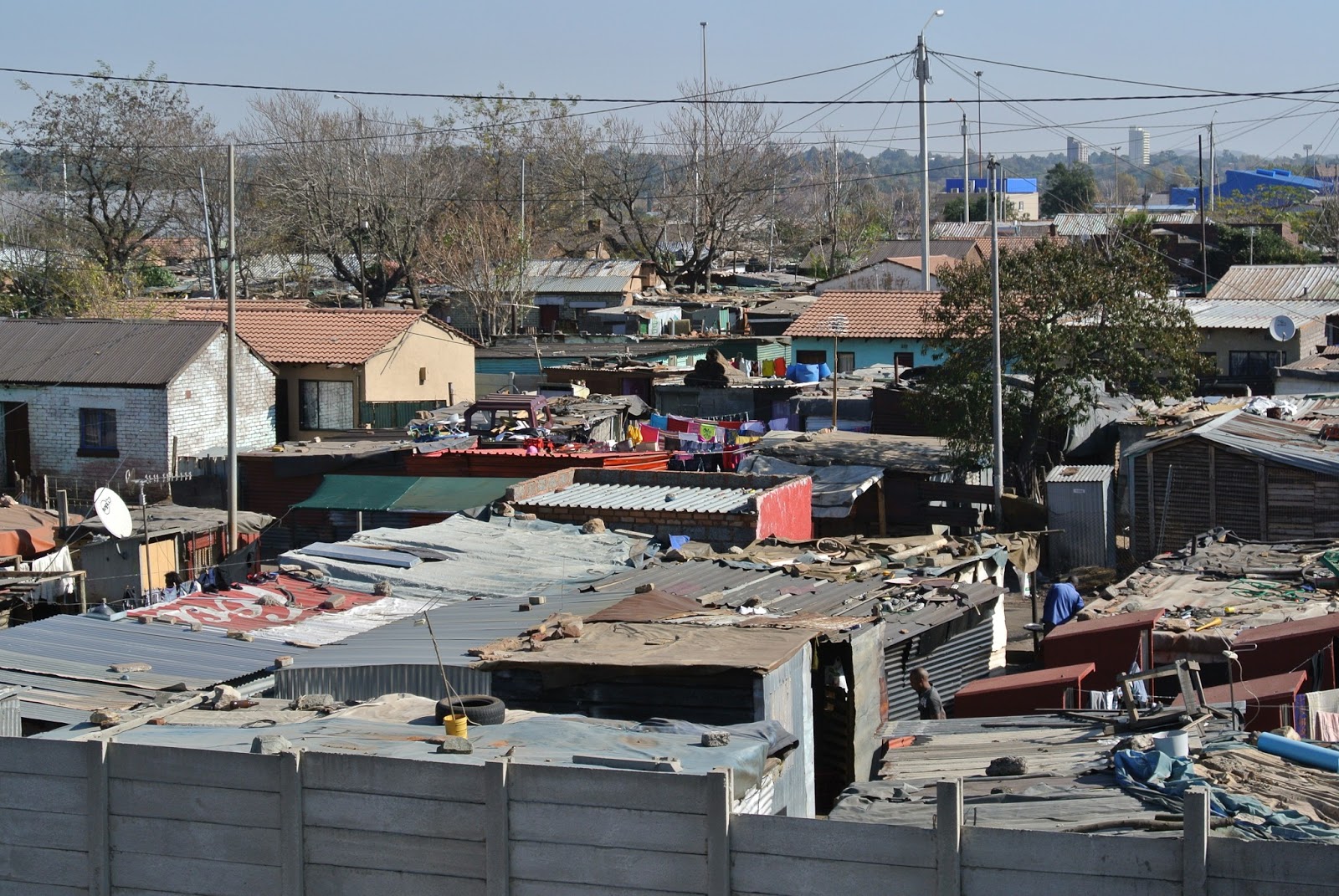 |
| Again, housing on the Eastern outskirts of Johannesburg. |
I am no designer. I crop things in MS Paint. I download templates and adjust them because I wouldn't know which design programs to use or how to use them. But I have kind of being studying how to look at things and humans and culture for years, and sat through numerous classes on design alchemy, so I am not entirely ignorant on the topic. And as I said, design is relevant to every one, all day, every day.
(Stefan Sagmeister and Jessica Walsh also offer a great Q&A on their website, or check out Sagmeister's TED Talk on designing happiness).
Saturday, 3 October 2015
Girl
 |
| Henri de Toulouse-Lautrec - Au Moulin Rouge (1892-95) |
By coincidence I live in the area that the exhibition centres around. Montmartre housed most of the brothels and bars where the girls could work, as well as offering cheap housing for artists like Manet, Degas and Picasso. The exhibition also details the world of higher class escorts who catered to the extremely wealthy and mostly managed to marry someone with a title, thus ensuring their livelihood. But for most women, prostitution was what they had to do to survive: in addition to being washerwomen, maids or bar ladies, they had to supplement their income by selling their bodies in order to survive in the city.
Now, a century later, the street between the Moulin Rouge and Anvers consists of sex shops and tourist stores. To the left of my door is the what seems to be the gay leather sex-wrestling outfits store, and to the right the dildo one. Then there is the Sexodrom with various floors (and their are urgently looking for a sales person, judging by the sign that I have walked past daily in the last weeks). All of them somehow have signs that just read 'Sex', so I am not sure about the specific customers that they cater to. It can't just be tourists that get lost on their way from the Sacre Coeur to the Moulin Rouge. These shops must survive because there are actually enough people buying 50-Shades-of-Gray branded handcuffs and pleather suits and porn on DVDs.
There is a certain seediness to it all. As with the red-light districts of other cities, it seems like something to poke fun at, something where tourists can enter and as a joke buy a little somethin-somethin. But just as in the 1900s there must be a social and cultural undercurrent now that accepts the need for prostitution. What is that need though? Is sex really a need, something that should be pencilled into the Universal Declaration of Human Rights or added to the Ten Commandments or whatever system of belief it is that humanity adheres to? What are the implications when ever increasingly the body comes at a price? And here, I am not just talking about literally paying for the sexual services of a person, of money exchanging hands. No, what are the consequences of when social media become sexual media? As much as apps such as Grinder, Tinder and here, adopte un mec (jip, "adopt a guy") are used to simply connect with other (mutually interested and interesting) people, one cannot deny that most of them are also used as hook-up apps.
I find it all disingenuous. Everyone searching for easy accompaniment, for no-strings-attached, for emotional uninvolvement and not knowing anothers names, and yet everyone somehow seeming so damn lonely all the time.
Friday, 2 October 2015
Sugar
For a while there everyone seemed to be talking about food trucks, with it culminating in the food-truck-film Chef about a chef losing his restaurant job and going on the road throughout select cities in the US. The only time I remember eating something truckishly was a childhood holiday to the Virgin Islands, where we stopped to grab the best frozen yoghurt ever from a turquoise caravan. All I can remember is hundreds of hundreds-and-thousands, which at that time equalled happiness.

However, this gaping hole in my foodie history was filled last week as we first went to Le Food Market, located between the Metro stations Menilmontant and Couronnes. Various sellers offer dishes from all over the world and in between the food stands there are benches to sit at and enjoy your meal. The aim is to make the market a monthly event and to promote good quality food at reasonable prices. All of the dishes were priced between 6-12€, which is about equal to what you would pay for a 'petit plat' at lunchtime in a restaurant.


We queued at the Cafe Chilango to get tacos filled with beef and chicken, and one of the girls had a burger from Burgers de l'Amour. We also grabbed some pasteis de nata for breakfast the next morning before heading to the absolute highlight: the ice-cream rolls. I had seen videos online about people on an Asian vacation (Thailand perhaps? I can't remember exactly) getting ice-cream rolls. Luckily, the trend has travelled to Paris so BOOM ice-cream rolls at Le Food Market. You choose your flavour (chocolate-pear, thank you kindly), which gets squirted in different layers onto a freezing plate. By quickly scraping together and then spreading apart the mixture, the liquid becomes solidified quite quickly. The last step is then to said scraper to create four or five individual ice-cream rolls, which are then topped with either chocolate or caramel sauce and a choice of nuts or pralines.


I had expected the ice-cream to be more of a novelty and not necessarily to be particularly tasty. The assumption was that the rapid freezing would perhaps cause more ice crystals to form and thus the ice-cream to be crunchier than expected. It was not. It was delicious. Easy as that. Delicious.

Saturday evening was spent at an actual food truck event, where the Carreau du Temple had local trucks outside and French-Korean food inside (in light of it being the French-Korean year). It was difficult to decide what to get, but I ended up with great grilled cheeses and L had a Mexican wrap. No ice cream this time though.


Most interesting is the astounding lack of vegetarian options at both events. Even the grilled cheeses only came in poulet or boeuf (chicken or beef), which I find a bit difficult. Certainly, one could probably ask for a vegetarian version (it's grilled cheese, so...), it was just rather evident that the majority of trucks and stands simply did not offer it on their menus. After bringing this up with the other interns, all of them agree that being vegetarian or vegan in France is much harder as products are difficult to come by and/or excessively expensive. Whereas in Germany one can easily find soy and other substitutes at more or less affordable prices, the supermarkets here rarely have soy mince or rice milk or whatever it is you'd need. Even the two vegans in the group are ordering steaks and burgers here, stating the lack of options both in the supermarkets and when going out. So for now I have entered into an uneasy compromise with myself: eating out means eating everything, eating in means meat-free dishes. I think the best solution to this would just be living off of ice-cream rolls.
Friday, 25 September 2015
I could drink a case of you darling/ I would still be on my feet

Paris is a filthy place. People living in a constant state of cramping: apartments are tiny, the metro is packed and the streets overflow with people, so even if this is big city living it should rather be called small space surviving. For now I live in a small studio on the 7th floor, which consists of two rooms. The one contains the bed and a small table, whereas the other has a shower, a sink and two stove plates. All you need, basically. Oh, the toilet is outside on the corridor and is shared between the 4(?) studios on this floor. The building sits between sex shops and small supermarkets near Pigalle in the 10th arrondissement. When I stand on a chair and look out of one of the windows I can spot the Eiffel tower in the distance. There is constant noise, even though I am at the back of the building: in my room itself the fridge makes alarm-like sounds whilst the electricity metre is an eternally spinning circular silver thing that sounds like an eternally spinning circular silver thing. Then there is the school next door whose electronic bell rings at strange intervals and the kids playing basketball on the court in the road behind the house. This cacophony is expanded by occasional squeals of a siren, hearing my neighbours through the walls and on weekends the music from the clubs in the area combine into an audible mess in the ever colder turning air.
First there was sound, and then there were the masses of people. MASSES of people. Endless streams of humans everywhere, always moving somewhere in haste. In a city of millions, the individual disappears. It is like an amoeba, swallowing up everyone into anonymity. Paris is a bit of a depressing city in this regard. All of living on top of one another and yet no one and nothing matters, all replaceable, all just cogs in a machine.
And yet there have been moments where the myth that is this city presented itself. On a bad day, as I was leaving the metro, a man on roller skates with ballerina lacing whizzed past. Another time, an Algerian man helped a woman from the French Antilles with her suitcases and after 6 metro stations they exchanged business cards. Another intern keeps buying a begging woman food for lunch. On Wednesday I walked to the Seine, met a friend for a McFlurry, and walked back. Yesterday we went to a food market and had rolled ice cream (ok, I like any type of ice cream, rolled, flurried, scooped...). Tomorrow there is the Anish Kapoor exhibit in Versailles. On Sunday the city is partially car-free. Last weekend the journées du patrimoine (cultural heritage days?) enabled anyone with an ID to get into the Élysée Palace (and other no-go ministeries and museums and and and) and check out the president's office (more on the 6.5 hours of queuing I'd like to get back in another post).
So despite a waft of urine on occasion hitting your nostrils, despite the millions of others trying to eek out a living here, despite excessively high costs and tiny spaces, well, despite all the negativity, I'd gobble it all up again, come back for seconds and even thirds. I'd drink a case of this place because nowhere else is misery this closely accompanied by magic.
Thursday, 24 September 2015
Ode to You
My mother keeps sending pictures to our family WhatsApp group of people braaiing (barbecuing), because today is Heritage Day in South Africa. Somehow, some clever marketing person decided to rebrand the day to 'Braai Day', which everyone embraced wholeheartedly and now people get together to celebrate the rainbow nation by grilling meat over an open flame.
In Paris it was a day like any other, a day closer to another weekend. As people at home were enjoying spring's sunshine and a good boerie roll I was sitting at a laundromat eating a pain au chocolat. Waiting for my laundry made me wonder what heritage means to us, both as a people with a strong patriotic streak and as individuals with very different ideas of what a single heritage might constitute. Are we even allowed to be patriotic? Does it depend on where you come from for you to be allowed to be proud of the passport you carry? In a world that is becoming more and more borderless, does the concept of nationhood still hold true? And does heritage go beyond birth certificates to included lived experiences, past and present?
Elsewhere, I have questioned the idea of belonging, of finding the puzzle that you as a piece fit into. Heritage is complicated by our family history: on the one hand white Afrikaners (white Afrikaans-speaking South Africans), on the other hand white German emigrants. Double the whiteness, double the guilt. The one side systematically divided a country up according to skin colour and for more than 50 years privileged anyone European-looking to the detriment of a much larger (and darker) local population. The other side systematically divided up a country according to what they defined as a superior race and tried to exterminate any population that did not fit this mould, leading to the World War II and millions dead (soldiers, civilians and those in the extermination camps).
On Heritage Day, do we look to this past and remember never to make the same mistakes? Do I acknowledge the privilege of my life, through the whiteness of my skin and the middle-class status that my parents worked hard for? Is there even a point to this navel-gazing, when most don't consider the current inequality that has shifted from race to class? A friend recently posted an article by Prof. Jonathan Jansen, rector of the University of the Free State, titled How to be White and Happy in South Africa . The gist of the article is to accept your position and to learn to listen to those from different cultures and (economic backgrounds), as you have grown up shielded from the hardships that people with darker pigmented skin had to endure. Heritage today, an attempt at understanding?
Now I live on a continent of privilege and with refugees flooding into the European Union the prejudices we carry with us become even clearer. There were wonderful images of people welcoming groups of refugees as they arrived in Munich. On social media I have seen the engagement of my peers through organisations such as Refugees Welcome in trying to help, be it through donating their time, their money or other goods. People are coming together in hours of need, and it is flooring to see. As Jonathan Freedland argues in an article for The Guardian, "this has been no overnight transformation. Germans have spent decades reckoning with their past in a way few nations can match. Nevertheless the embrace Germany is currently offering to the dispossessed of Syria – while so much of Europe closes its doors or quibbles over tiny numbers – has altered perceptions anew. "
So perhaps heritage can evolve into something better, from those who have helping those who have not to my Afrikaans mother making my German gran's Spätzle with Rouladen and showing us how to do it. Heritage is in the buildings we queue for hours to get into, in the DNA of our appearance and the family recipes that get passed on from generation to generation, in knowing that the evil that men do lives after them and the good is interred with their bones.
In Paris it was a day like any other, a day closer to another weekend. As people at home were enjoying spring's sunshine and a good boerie roll I was sitting at a laundromat eating a pain au chocolat. Waiting for my laundry made me wonder what heritage means to us, both as a people with a strong patriotic streak and as individuals with very different ideas of what a single heritage might constitute. Are we even allowed to be patriotic? Does it depend on where you come from for you to be allowed to be proud of the passport you carry? In a world that is becoming more and more borderless, does the concept of nationhood still hold true? And does heritage go beyond birth certificates to included lived experiences, past and present?
Elsewhere, I have questioned the idea of belonging, of finding the puzzle that you as a piece fit into. Heritage is complicated by our family history: on the one hand white Afrikaners (white Afrikaans-speaking South Africans), on the other hand white German emigrants. Double the whiteness, double the guilt. The one side systematically divided a country up according to skin colour and for more than 50 years privileged anyone European-looking to the detriment of a much larger (and darker) local population. The other side systematically divided up a country according to what they defined as a superior race and tried to exterminate any population that did not fit this mould, leading to the World War II and millions dead (soldiers, civilians and those in the extermination camps).
On Heritage Day, do we look to this past and remember never to make the same mistakes? Do I acknowledge the privilege of my life, through the whiteness of my skin and the middle-class status that my parents worked hard for? Is there even a point to this navel-gazing, when most don't consider the current inequality that has shifted from race to class? A friend recently posted an article by Prof. Jonathan Jansen, rector of the University of the Free State, titled How to be White and Happy in South Africa . The gist of the article is to accept your position and to learn to listen to those from different cultures and (economic backgrounds), as you have grown up shielded from the hardships that people with darker pigmented skin had to endure. Heritage today, an attempt at understanding?
Now I live on a continent of privilege and with refugees flooding into the European Union the prejudices we carry with us become even clearer. There were wonderful images of people welcoming groups of refugees as they arrived in Munich. On social media I have seen the engagement of my peers through organisations such as Refugees Welcome in trying to help, be it through donating their time, their money or other goods. People are coming together in hours of need, and it is flooring to see. As Jonathan Freedland argues in an article for The Guardian, "this has been no overnight transformation. Germans have spent decades reckoning with their past in a way few nations can match. Nevertheless the embrace Germany is currently offering to the dispossessed of Syria – while so much of Europe closes its doors or quibbles over tiny numbers – has altered perceptions anew. "
So perhaps heritage can evolve into something better, from those who have helping those who have not to my Afrikaans mother making my German gran's Spätzle with Rouladen and showing us how to do it. Heritage is in the buildings we queue for hours to get into, in the DNA of our appearance and the family recipes that get passed on from generation to generation, in knowing that the evil that men do lives after them and the good is interred with their bones.
Sunday, 6 September 2015
L'ombelico del Mondo

The first hurdle was getting there: as we had to attend an introductory meeting on the Thursday and there were no suitable flights from Hamburg (18h layover in Bruxelles, anyone?), I took the train to Berlin, spent an evening there and left early the next morning. Since Ryanair lands at Malpensa Airport, it takes another hour by bus to reach the city. Berlin had been cool enough to wear a leather jacket over a blazer, but any layering proved detrimental as soon as I stumbled onto the sidewalk next to the central station - beads of sweat started pearling on my top lip and the feeling of sweating what could well fill a swimming pool didn't stop until I boarded a different plane heading back to Germany.
At the central station, I embarked on a linguistic adventure by trying to buy a two-week pass for the underground. None of the four tellers could speak anything except Italian (being multilingual this was very annoying, as normally I can get by with jumbling all Romance or Germanic languages), but after half an hour of drawing images and pointing at a calendar the friendly man and I seemed to have reached an agreement on what I wanted, and I walked out with a metro card. Sadly, it turned out to be only for the inner city, and the Expo is situated riiiiight outside of this. So near, and yet so far. The linguistic-ticket adventure continued the next day with the help of Italian volunteer Anna, who sacrificed some time to help me with the ticketing dilemma, but it all worked out (basically because I just nodded and Anna told me when to pay).
From there I rolled my suitcase to a bench near where our meet up would be. Ever so often a whiff of dog piss would waft over and pigeons were trying to camp out on my suitcase, but I feared moving since I'd probably get lost. When I did walk the last metres to the Fondazione Stelline where our group would be meeting up, I noticed that the bench I had been chilling on was right next to Santa Maria delle Grazie, the church where Da Vinci's Last Supper is housed. Despite efforts during the following weeks to get an appointment to go in, everything had been booked solid weeks in advance and sadly I never managed to see it (but am finding solace is knowing I had kind of lain near a masterpiece).
After meeting everyone, getting various passes and official outfits, the group headed to a student residence just south of the Duomo, which would be our accommodation during our stay. The next two weeks had a similar daily rhythm: the first shift would meet up in the lobby, take the train to the Expo together, work the shift, have lunch together and then little groups would explore different pavilions or head into the city. For dinner we'd sometimes could something together or those on the upper floor would hang out on the terrace. Then the same thing would happen again the next day.
 |
| Empty Expo site. |
 |
| Ecuadorian National Day. |
 |
| Wicked headdress in even worse heat. |
 |
| Pavilion Zero, where the history of food is traced. |
 |
 |
| German cartons making sense. |
 |
| Germany: practical advice to take home. |
 |
| Germany, still. |
 |
| The UK |
 |
| The UK Hive |
 |
| From the outside. |
 |
| Angolan Ladies. |
 |
| Kazakhstan in 5D |
 |
| The Czech Republic's great pool. |
 |
| Austria. |
 |
| Still Austria. |
 |
| The USA. |
 |
| Pick me. |
Listen, I am not all doom and darkness. The weeks at the EU pavilion provided the opportunity to gain valuable insights into how the Union works, on how delicate political relationships need to be handled (case in point: India being absent from the Expo as there is some beef with Italy for Italian marines having mistaken Indian fishermen for pirates and thus shooting them dead. Now India wishes the marines to be tried in India, as they were in Indian waters, but Italy is refusing to hand them over. Something like that) and how human error seeps in everywhere, especially into events of this magnitude. I also learned what Snapchat was for (ok, I still don't get it, but I have downloaded it), how to say bad words in Italian and how to compromise when my personal desires contradict with what the group wants to do. This was a great group of enthusiastic young adults who want to make the world a better, more accepting, more integrated place and who were all very willing to both share their own culture and learn from others (yay EU).
But on the last night of our stay, we all gather on the roof of the pavilion to witness the marvel that is the Tree of Life, an interplay of light, water and music that makes the crowd cheer every time (and every half hour if I remember correctly). Everyone was tired but exited as we drank Aperol Spritz or beer and looked down on the masses that had gathered below to see this display. People were taking uncountable group photos and already reminiscing about how we'd stay in contact and never forget this.
 |
| Aperol for all. |
 |
| Shine baby shine. |
Subscribe to:
Posts (Atom)