So.
Last week I went on a cruise from Kiel to Oslo. And forgot my diary in the cabin.
Those pages are a written testament from the moment I left SA, with all the trips, concerts, emotions and thoughts in between recorded in it. I realise full and well it is just paper, it is not the thing of most monetary worth that I could have lost. Yet it matters, because it cannot be replaced. I try to remember what I wrote down. The drawings I did of the covered Muslim ladies at Doha airport with their very fancy footwork. The questioning of whether the winter depression will ever end, whether depression can truly be linked to the darkness outside and is not simply a consequence of not being able to see the wood for the trees. Late night notes on a full moon admired from my bedroom window. Little trips to Copenhagen, Hamburg, Amsterdam. Drawn maps of places where I didn't have internet. Daily anecdotes on the long vacation back home. All these words, lost.
I've had diaries since childhood. In a box at my mother's house a dozen or more are gathering dust. Perhaps each of us has something that saves us, something that makes sense when everything else does not. For the one it may be a form of exercise, for another it may be escaping into WoW or League of Legends or some other alliterated game. It may be a person or a pet or dancing to 'Lotus Flower' when you are alone. Yet (I assume) we all need to flee our minds and our environments at times. And that is what these diaries have provided: a safe space to make sense of things. Not even to make sense so much, rather to release the jumbled mess in my brain onto the neat lines of a page. The written word, the word written in my handwriting, makes the bad and the good better.
My aunt asked me last year why I write. What is the reason to sit down, whether it be in front of a computer or a blank page or a diary or a typewriter or whichever other device you may choose, and to start pouring the words onto paper?
The answer is simple: there is nothing else. It is not about being read by others (although naturally one also wants to be read) or about creating the next great novel or changing the world. This writing is a chance to be selfish, to give all of myself to myself. It is a chance to see how I have changed over the years, how what seemed like mountains at the time could be conquered. It is a testament to the past, stemming from the fear that something might be forgotten. It is writing with my fountain pen when most things are typed these days. It is collecting tiny snippets of concert tickets and everyday conversations. It is knowing that words matter.
Quite fitting: this Scrabble ad. "There's magic in words". Indeed.

Showing posts with label loss. Show all posts
Showing posts with label loss. Show all posts
Sunday, 7 June 2015
Sunday, 22 March 2015
Hazelton
What a lovely day spent walking around the harbour and discussing life.
As I was heading home I noticed everyone walking their dogs, and it made me really miss mine. He has been dead for 3 years already, and yet sometimes I miss his extreme affability and good-naturedness. I miss the thick white hair, the cold black nose and black eyes. I miss the hard skin of his feet and the too-long nails scratching on the wooden floors.
A few years back I impulsively took out Animal Poems (edited by John Hollander), and in it found a poem about an old Cocker Spaniel by Robert Penn Warren that was poignantly beautiful:
Saturday, 20 July 2013
I should live in salt
So. Art exhibit #2 was Absa's L'Atelier, held at the Absa building in Joburg's CBD. Getting there was quite testing because there was traffic everywhere and as soon as we hit the inner city we stopped moving because of the build-up of cars, commuters and taxis. My spidey senses tell me that this was a very larney do, because of the following clues:
- there was a guest list.
- the ladies were all wearing heels.
- lots of waiters in black.
- there was an MC and speeches.
- it reeked of pretension
- I was a +1. Haha.
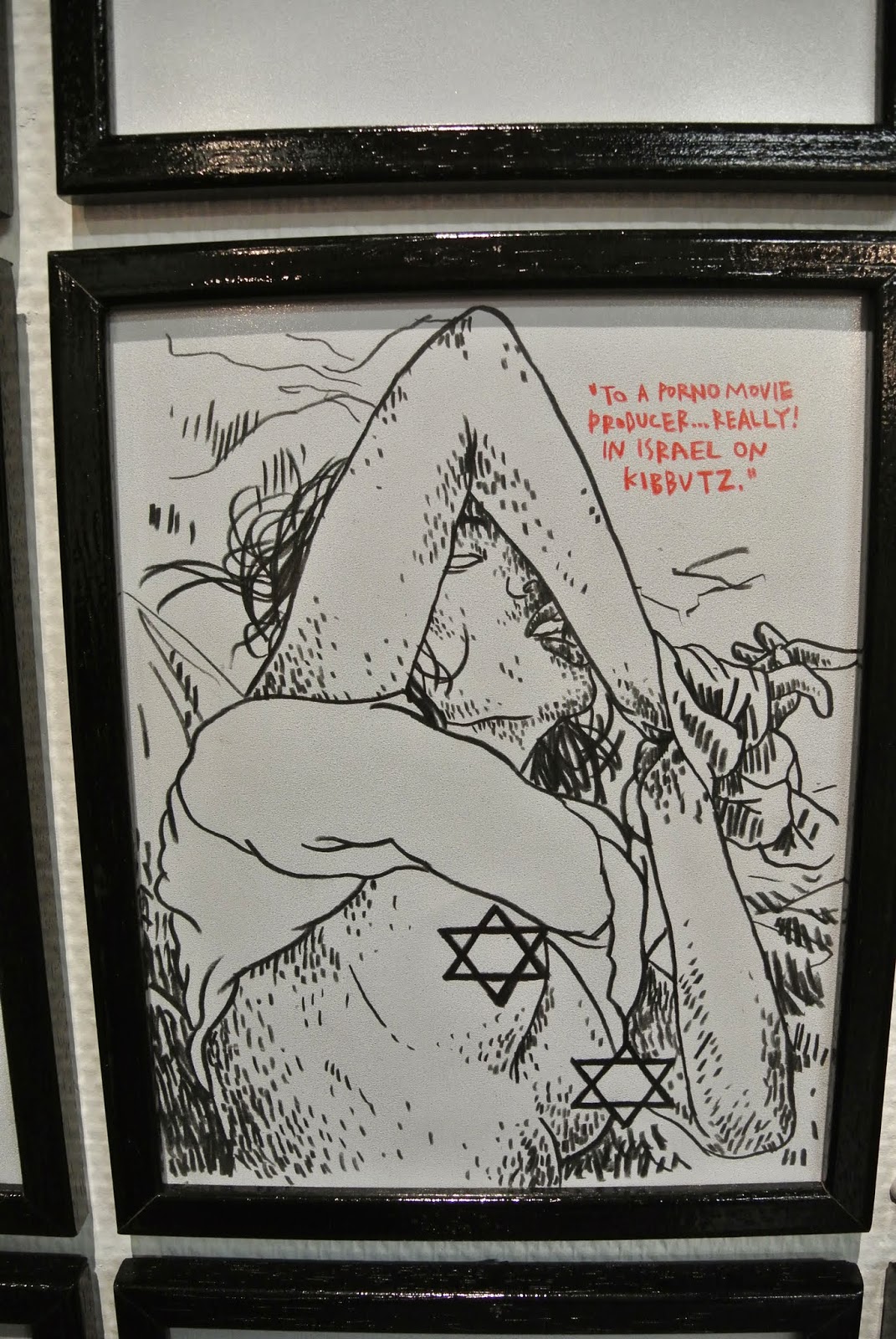
It was a mixed bag. Some of the artworks were plain silly (see the rainbow-coloured rugby balls and the basin below). Some were mediocre. Some were really cool. My favourites were the two works by Skullboy because they were fun, awkward and at times slightly sad as well. They felt human, whereas most of the other works felt more like they were created to get into the exhibit, not to express a particular emotion. I guess, like everywhere else, there is a lot of bullshitting that goes on in art.
From here onwards, it is just individual parts of Skullboy's You & Me piece.


 |
| Sasha Hatherly, Circadian I, 113111 |
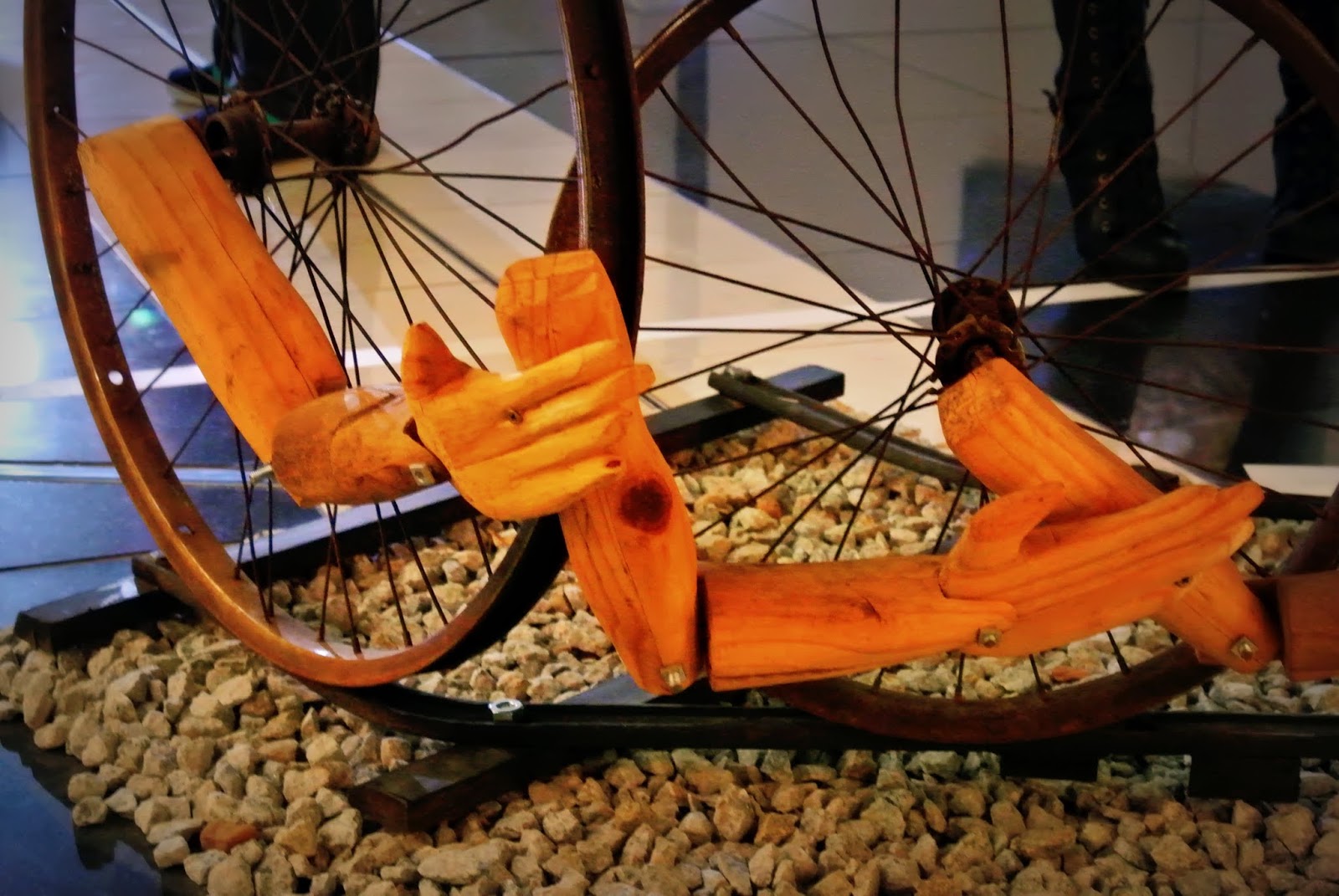 |
| Blantina Khutso Mmethi, Rhythmic Railway |
 |
| Daandrey Steyn, Kalosesthesia & Eidosesthesia |
 |
| Heidi Janice Mielke, This little piggy...wore high-heeled shoes |
 |
| Cassandra Wilmot, Prosthetic II |
 |
| Pierre Henri Le Riche, Hierargie (Hierarchy) |
 |
| Louis De Villiers (AKA Skullboy), The Lost Supper |
 |
| Andrew Sprawson, Drawn Curtains II |
 |
| Andrew Sprawson, Detail from Drawn Curtains II |
 |
| Megan Patricia Mcnamara, Flood |
 |
| Skullboy, You & Me |




Sunday, 10 March 2013
When all you got to keep is strong/Move along
One suitcase. I left with one suitcase, my laptop bag and a handbag. I didn't care about the things I had left, it was all about flying towards a future that had to be different from years lived in between.
My sister is moving out tomorrow and thus packing up her room. She has only one suitcase, true, but bags and bags and bags and bags and more bags full of things. Her room still looks full, even with half of her stuff gone already.
It is quizzical how we hang on to things. Tiny keepsakes, objects of remembrance, but also plastic bags and Tupperware that no longer has a fitting lid and carpets that are stained and CDs that are scratched and clothes that can no longer be worn in public. We hang on to bad sofas and creaky beds and tilted tables and uncomfortable chairs and squeaky wheelbarrows. We keep all of this broken stuff even though it neither gives something nor takes anything from our lives. All these objects do is remind us of the tiny little hoarding complex enshrined in capitalist society.
We are constantly encouraged to buy newer, better things to replace the old things that still work. So we are caught in this spiral where we don't want to throw away the old because we don't want to have wasted our money, but then we proceed to buy the new since spending money is fun, even if you have to pay with your Credit Card and the waves of debt are steadily inching up beyond where you can stand.
I, too, like my things. I like my books. I like my earrings. I very much like the new jeans that actually fit. I like the old photo albums. I like my mom's Rosenthal porcelain. I really like my red Adidas. I like my stuff.
But if it all goes away, if I can take nothing from the burning house but myself, well, I'll move along, because they are just things. Some can be replaced, some can be recovered from the Cloud, some might be lost forever.
It won't be all that tragic though. Losing everything does not equate to losing everyone.
I'll still have friendship.
I'll still have love.
I'll have hope.
And, somehow, happiness. Because being happy is not measured in how many objects we possess but in an appreciation for what remains when all else is lost.
Wednesday, 9 January 2013
613 shades of sad
When last we were here I carried him up/down the 100 or so stairs from/to the beach. My mom brought a sled and we pulled him over the sand when he couldn't walk any more. A week after returning to Pretoria I had to put him down, on the 31. December 2011. Being back makes me remember my Spitzi, and how much I miss him.
Brain Pickings chose John Homans' What's a Dog For?: The Surprising History, Science, Philosophy, and Politics of Man's Best Friend as one of the Top 10 books of 2012, which led me to this cartoon in The Big New Yorker Book of Dogs.
Brain Pickings chose John Homans' What's a Dog For?: The Surprising History, Science, Philosophy, and Politics of Man's Best Friend as one of the Top 10 books of 2012, which led me to this cartoon in The Big New Yorker Book of Dogs.
 |
| via Brain Pickings |
Wednesday, 21 November 2012
Don't fail me now
He holds 4 years of my life. What I wrote. What I saw. What I shot. And now he is refusing to give my memories back to me. He always seemed so reliable, earning my affection more than the others, keeping everything I could need in one place. Not anymore. He is stabbing me in the back, teasing me by lighting up but then failing to deliver.
We read that there was no way to get past his barriers, that opening him up was useless. We read that putting him in the freezer might work. It didn't.
Now I have to go fight with New World to get a new HD, but nothing that was on him.
We read that there was no way to get past his barriers, that opening him up was useless. We read that putting him in the freezer might work. It didn't.
Now I have to go fight with New World to get a new HD, but nothing that was on him.
Wednesday, 31 October 2012
Gracious
I have had someone walking away from me only once, and he has never noticed the loss created by that distance. Leaving does not always entail the option of coming back. Maybe it is the irony of fortune that my father chose to leave and never return, and my mother has to leave in order to return. Perhaps it is also a subconscious reassurance to the child in me that, without fail, she comes back to me, as I shall, without fail, return to her when I leave.
This poem by Cecil Day-Lewis, written for his eldest son, captures that letting go.
Walking Away
for Sean
It is eighteen years ago, almost to the day –
A sunny day with leaves just turning,
The touch-lines new-ruled – since I watched you play
Your first game of football, then, like a satellite
Wrenched from its orbit, go drifting away
Behind a scatter of boys. I can see
You walking away from me towards the school
With the pathos of a half-fledged thing set free
Into a wilderness, the gait of one
Who finds no path where the path should be.
That hesitant figure, eddying away
Like a winged seed loosened from its parent stem,
Has something I never quite grasp to convey
About nature’s give-and-take – the small, the scorching
Ordeals which fire one’s irresolute clay.
I have had worse partings, but none that so
Gnaws at my mind still. Perhaps it is roughly
Saying what God alone could perfectly show –
How selfhood begins with a walking away,
And love is proved in the letting go.
Wednesday, 1 February 2012
One art
One Art
The art of losing isn’t hard to master;
so many things seem filled with the intent
to be lost that their loss is no disaster.
Lose something every day. Accept the fluster
of lost door keys, the hour badly spent.
The art of losing isn’t hard to master.
Then practice losing farther, losing faster:
places, and names, and where it was you meant
to travel. None of these will bring disaster.
I lost my mother’s watch. And look! my last, or
next-to-last, of three loved houses went.
The art of losing isn’t hard to master.
I lost two cities, lovely ones. And, vaster,
some realms I owned, two rivers, a continent.
I miss them, but it wasn’t a disaster.
—Even losing you (the joking voice, a gesture
I love) I shan’t have lied. It’s evident
the art of losing’s not too hard to master
though it may look like (Write it!) like disaster.
The university has started again, so I don't have the time to write myself, but Elizabeth Bishop does it better in any case.
Subscribe to:
Posts (Atom)